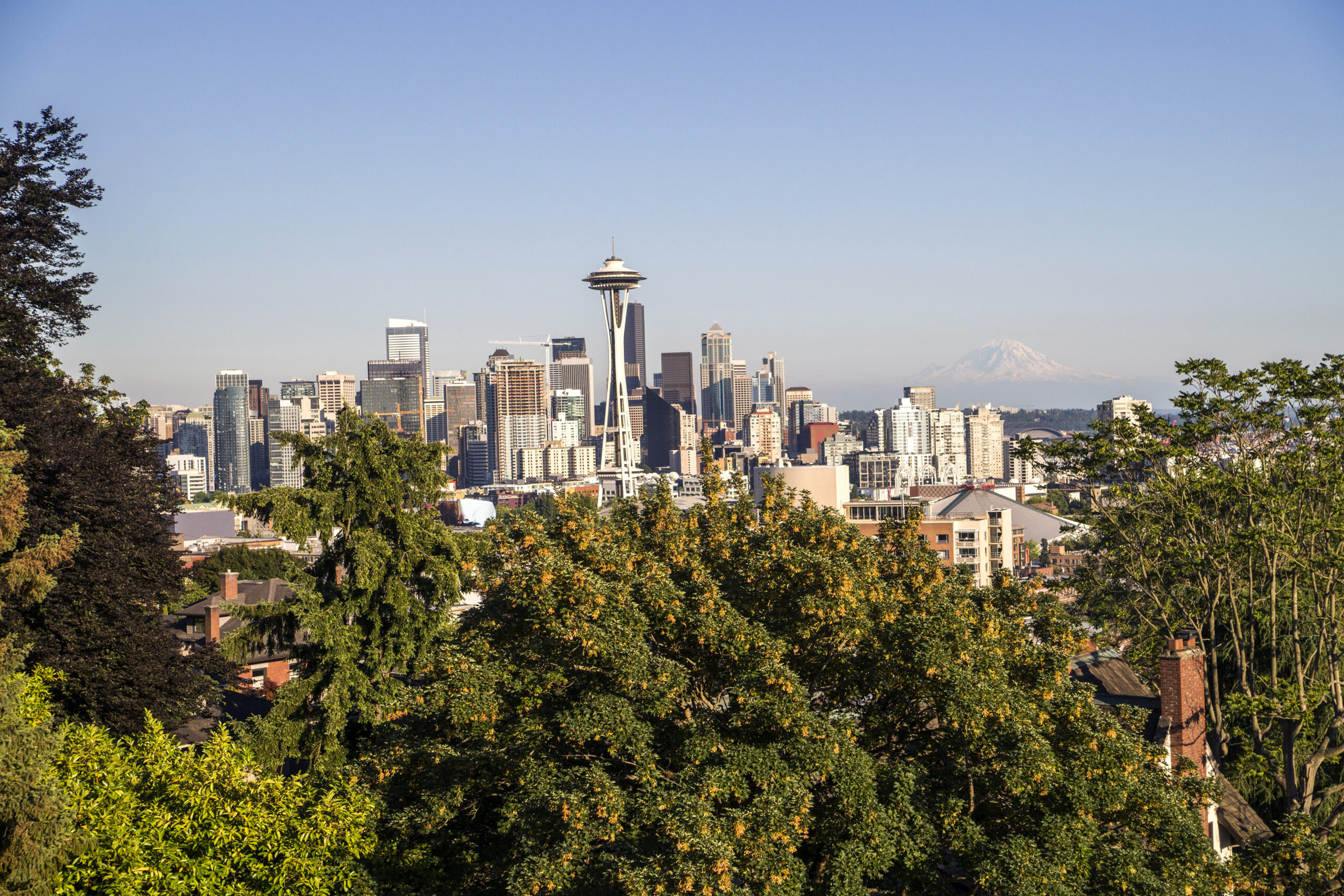
Seattle – Today, Mayor Bruce Harrell signed a new Executive Order to increase tree preservation on private property, building on efforts over the last three years to protect and grow Seattle’s urban forest and equitably distribute canopy cover throughout the city.
Recognizing the important health, climate, and quality of life benefits of Seattle’s tree canopy, the order directs City departments to develop and implement policy and regulatory changes to encourage the preservation of exceptional trees on private property.
“As we work to build the housing that Seattle needs to grow and thrive, we must also protect the trees that cool our neighborhoods, clean our air and water, and contribute to our overall climate resilience,” said Mayor Harrell. “This Executive Order commits to an inclusive, collaborative One Seattle approach to encourage preservation of trees that provide immeasurable benefits to our neighborhoods while complementing existing efforts to plant the next generation of our urban forest and equitably distribute canopy. We know that many Seattle residents feel passionate about protecting our trees, and we are grateful for their advocacy to ensure we remain known as the Emerald City.”
Key actions in the order include:
- Develop a conservation easement incentive program for private property owners to preserve singular or exceptional trees and tree groves in perpetuity. The creation of this program is supported by a $100,000 investment in Mayor Harrell’s proposed 2026 budget.
- Create permitting-related incentives for on-site tree retention as part of the Permitting, Accountability, and Customer Trust (PACT) initiative, and examine current permitting practices that can inadvertently discourage tree preservation during housing construction.
- Develop a citywide tree pest readiness and response plan to monitor, prevent, and control tree pests, minimizing their spread and impact on Seattle’s urban forest and building climate resilience.
- Engage with federally recognized Tribes to preserve historical and cultural resources on private property.
- Update the stormwater code and incorporate new and innovative solutions to support tree canopy goals, including bioretention cells.
Additionally, the order will evaluate moving some tree preservation and enforcement related functions to the Office of Sustainability and Environment (OSE). The department currently oversees the citywide urban forestry framework and planning, including the Canopy Coverage Assessment to track trends and data on tree health and canopy distribution.
This Executive Order builds on actions Mayor Harrell has taken over the last three years to protect, preserve, and plant more trees in the Emerald City. This includes the creation of the One Seattle Tree Plan to replace trees on public property on a 3-to-1 ratio; utilizing a $12.9 million grant to plant more trees in under-canopied neighborhoods; expanding the Trees for Neighborhoods program to support planting and maintenance of new trees; and establishing a new tree nursery to grow 500 trees locally every year. The new tree nursery is set to open later this month.
The City remains committed to achieving 30% canopy coverage by 2037 and supports many programs and partnerships to maintain, protect, and expand Seattle’s urban forest. Seattle has nearly doubled tree plantings as part of a broader effort that has added 30,000 new trees through public and private initiatives since 2022.
What People Are Saying
Councilmember Maritza Rivera, District 4
“I support efforts to preserve our tree canopy as we continue to plan for Seattle’s growth. Mayor Harrell’s Conservation Easement Incentive Proposal would give us one more tool to do that. His proposal, combined with the tree protections included in the Comprehensive Plan like Amendment 102, put us in a better position to accomplish both tree preservation and increased density.”
Chairman Leonard Forsman, Suquamish Tribe
“The Suquamish Tribe applauds the City of Seattle’s efforts to protect and preserve cultural and natural resources in our ancestral territory. Chief Seattle, in his 1854 speech given at Pioneer Square, said ‘every part of this soil is sacred in the estimation of our people.’ We look forward to working with the Mayor and the City Council in implementation of this Executive Order in our respective efforts to respect our traditions and restore our fragile ecosystems.”
Chairman Robert de los Angeles, Snoqualmie Tribe
“Every part of this landscape holds memory. When the City stands with Tribes to protect cultural resources, it honors both the land itself and the generations who have cared for it since time immemorial.”
Michelle Caulfield, Interim Director, Office of Sustainability and Environment
“Trees are critical for healthy communities and climate resilience. Everyone has a role to play in keeping Seattle green and ensuring all residents have access to the many benefits of trees. This Executive Order strengthens efforts to expand tree canopy and supports climate and cultural resilience and new tools for private property owners to protect our largest trees. We thank Mayor Harrell for his leadership, and we look forward to collectively building a sustainable and vibrant Seattle for generations to come.”
Joshua Morris, Conservation Director, Birds Connect Seattle
“Economic incentives too often favor tree removal over preservation, accelerating canopy loss and exacerbating environmental inequities. Birds Connect Seattle has been exploring strategies to counter this trend. Last year, when we sold our former Wedgwood headquarters, we worked with the buyer to place a conservation easement on the property, protecting its mature trees and native plant garden in perpetuity. We are eager to share our experience and help the city develop a conservation easement program.”
Kristin Jackson, Executive Director, PlantAmnesty
“PlantAmnesty, along with its The Last 6000 Campaign and Birds Connect, has been studying conservation easements as a tree protection strategy in response to community inquiries and observations during urban development. It’s universally known that trees provide a number of public and cultural benefits and have a direct impact on our well-being and health. A program that recognizes the neighborhood benefits a large tree provides, especially those remaining in under canopied areas, should be explored and supported.”